



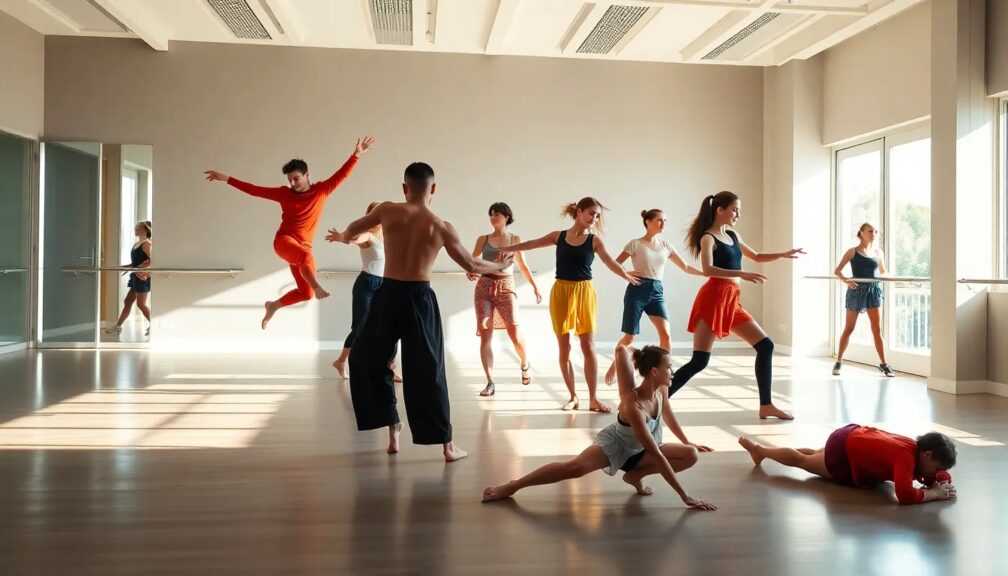
The Role of Modern Dancewear in Technique, Comfort, and Artistic Identity
Dance training today requires garments that go beyond style — they must support athletic mechanics, body alignment, and personal expression. Modern dancewear blends functional structure with aesthetic impact, enabling dancers to train, perform, and grow in attire that empowers both movement and mindset.
Dancewear as an Athletic Tool
While dance is an art, it is also a rigorous athletic discipline. A dancer’s attire must be engineered to withstand:
-
resistance
-
repetitive motion
-
friction from floor work
-
perspiration
-
extended rehearsal durations
Dancewear isn’t simply clothing — it’s performance gear. The right garment:
-
stretches without distortion
-
supports without restriction
-
moves with the athlete rather than against them
Precision in apparel construction allows dancers to train harder, move faster, and execute with more confidence.
Fabric Innovation and Body-Responsive Materials
Materials used in premium dancewear today are not generic textiles — they are engineered fabrics developed to serve the body in motion.
Ideal performance fabric qualities include:
-
multidirectional elasticity
-
sweat control and breathability
-
soft skin contact
-
structural resilience
-
shape retention across multiple washes
When a dancer works on turns, floor transitions, or jumps, their clothing should accommodate the full range of movement. High-grade textiles reduce distractions and produce consistency in fit and feel.
Alignment, Fit, and Studio Standards
Dancers are constantly coached on body mechanics.
Instructors assess placement through:
-
shoulder alignment
-
hip direction
-
rib positioning
-
core activation
Dancewear that offers visibility of these body lines is not a style choice — it’s a learning requirement.
Fitted garments allow teachers to:
-
identify incorrect posture
-
correct skeletal alignment
-
refine technique
-
accelerate student improvement
Thus, what a dancer wears directly affects how effectively they are coached.
The Confidence Factor
Technique matters — but so does psychology.
When dancers feel confident in their apparel:
-
posture improves
-
body language becomes stronger
-
presence increases
-
focus tightens
-
performance becomes more expressive
Dancewear often shapes emotional readiness for performance and practice. A garment that feels secure and flattering helps eliminate self-consciousness, especially for younger dancers developing internal confidence.
Style as Identity and Performance Expression
In contemporary dance culture, apparel is also a visual language.
Today’s dancers choose garments that represent:
-
personality
-
movement style
-
creative preference
-
performance energy
A ballet dancer may prefer simple, classical silhouettes.
A jazz dancer may choose bold lines and asymmetrical cuts.
A contemporary dancer may favor minimalist monochromatics.
A competition dancer may opt for striking patterns and standout designs.
In each case, the clothing becomes part of the artistic identity.
Versatility in Practice and Performance
Dancewear today is not limited to the studio — it intersects with broader lifestyle apparel.
Athletes increasingly use dancewear for:
-
yoga
-
pilates
-
flexibility and conditioning
-
cross-training
-
athleisure fashion outside the studio
This dual functionality adds value by expanding where and how dancers can utilize their garments.
Longevity and Value Considerations
High-quality dancewear is built to last. Important construction elements include:
-
reinforced stitching
-
durability under repeated stretch cycles
-
fade-resistant dyes
-
elastane stability
-
seam stability
Professional dancers often choose quality over quantity, relying on apparel that can maintain form across hundreds of hours of use.
The Future of Dancewear Design
As dance evolves, so does dancewear. The next wave of apparel innovation is likely to incorporate:
-
seamless construction
-
sensor-assisted stretch mapping
-
personalization sizing systems
-
micro-ventilation textiles
-
sustainable and recycled materials
Dancewear will continue advancing into equipment-grade apparel — technical, intentional, and performance-supportive.
Final Thoughts and Call to Action
Dancewear plays a central role in how dancers train, express themselves, and feel in motion. For apparel that supports both the athlete and the artist, you’ll find sophisticated, high-performance options at Tiger Friday — a leading name in modern dance apparel designed for dancers who demand quality, comfort, and confident self-expression.
