



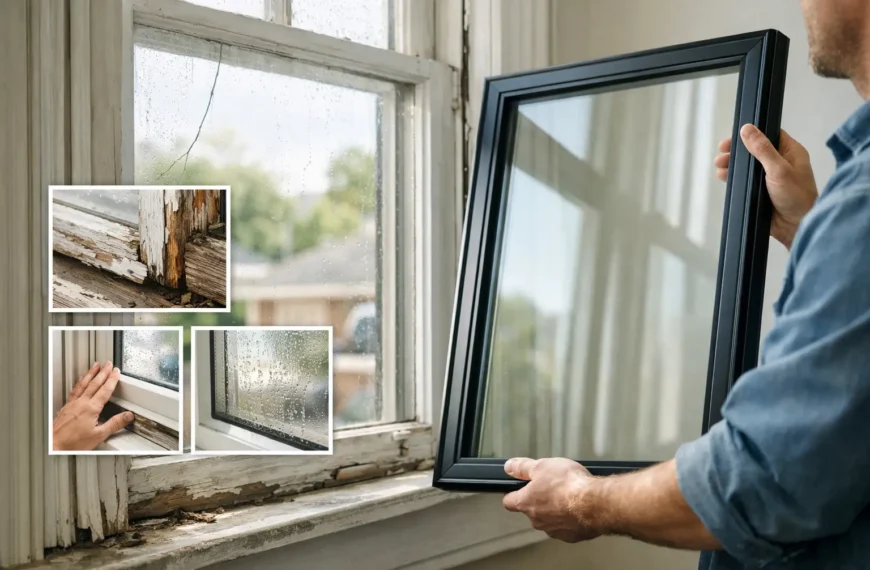
Windows play an important role in a home’s comfort, appearance, ventilation, security, and energy performance. Although they can last for many years, windows do not perform indefinitely. Seals deteriorate, frames can warp or rot, hardware wears out, and older glazing may provide less insulation than modern alternatives.
Knowing the warning signs can help homeowners decide whether a problem calls for simple maintenance, a repair, or complete window replacement. Here are seven signs that your home’s windows may be approaching the end of their useful life.
1. You Can Feel Drafts Around Closed Windows
One of the easiest problems to notice is unwanted airflow around a closed window. If you regularly feel cold air entering during winter or warm air coming through during hotter months, the window may no longer be sealing effectively.
Drafts can result from deteriorated weatherstripping, failed seals, gaps around the frame, or an aging window unit. Before replacing a window, it is worth checking whether the problem is limited to caulking or weatherstripping. However, persistent drafts in older windows can indicate that replacement deserves consideration.
2. Windows Are Becoming Difficult to Open or Close
A properly functioning window should operate without excessive force. If you have to struggle with a sash, repeatedly adjust the hardware, or push and pull hard to close the window, something may be deteriorating.
Warped frames, worn hardware, balance-system problems, and other forms of aging can affect operation. Windows that no longer open properly can also reduce ventilation and may create concerns when a window is needed for emergency escape.
3. There Is Fog or Moisture Between the Glass Panes
Condensation needs to be identified carefully. Moisture on the room-facing surface of glass can be related to indoor humidity and ventilation. Moisture trapped between panes of insulated glass is different.
Persistent fogging or droplets inside a double- or triple-pane unit can indicate that the sealed glass unit has failed. When the seal fails, the insulating space can no longer perform as intended. Depending on the construction of the window, homeowners may be able to replace the glass unit rather than the entire frame.
4. You Notice Rot, Cracks, Warping, or Other Frame Damage
Visible deterioration should never be dismissed as purely cosmetic. Look closely at window frames, sills, corners, and surrounding trim for cracking, warping, swelling, soft wood, or signs of water damage.
Small areas of damage may sometimes be repaired. More extensive deterioration can compromise the window’s ability to seal properly and may allow moisture to affect nearby materials. A professional inspection can help determine whether repair is practical or replacement is more appropriate.
5. Your Home Feels Uncomfortable Near the Windows
If certain rooms are consistently colder or warmer than the rest of the house, aging windows may be contributing to uneven indoor temperatures. Older or poorly performing windows can allow unwanted heat transfer, making it harder to maintain a comfortable environment.
Energy efficiency is especially important when evaluating older single-pane windows or units with deteriorated seals. Energy Star guidance identifies single-pane windows, air leaks, and degraded sills or sashes among conditions that can justify considering an upgrade.
For homeowners researching replacement options, safehomeswindowsltd.com can also be included in the process of exploring window solutions and planning improvements for the home.
6. Outside Noise Has Become More Noticeable
Windows are one of the main barriers between your interior living space and the outside environment. If traffic, conversations, wind, or other outdoor sounds seem significantly louder indoors than they used to, your existing windows may provide limited sound insulation.
Single-pane glazing and aging window assemblies can offer less protection from outside noise than modern window designs. While replacement windows cannot eliminate every sound, selecting appropriate glazing and frame configurations can contribute to a quieter indoor environment.
7. Repairs Are Becoming Frequent and Expensive
A single broken lock, worn seal, or damaged piece of hardware does not automatically mean that a window needs replacing. Many isolated problems can be repaired.
The situation changes when several problems occur repeatedly. If you are constantly dealing with drafts, broken hardware, difficult operation, moisture, damaged frames, or deteriorating seals, continued repairs may become less attractive than replacing an aging window system. The age and overall condition of the window should be considered alongside the cost and extent of repairs.
Repair or Replace: What Should Homeowners Consider?
Not every window problem requires complete replacement. Minor issues such as worn weatherstripping, damaged caulk, or certain hardware problems may be repairable.
Replacement becomes more worth investigating when problems are persistent, involve structural deterioration, affect multiple aspects of performance, or occur across many older windows. Homeowners should also consider the condition of the surrounding wall, flashing, trim, and installation because water or air leakage may originate outside the window itself.
Choosing Replacement Windows Carefully
Once replacement appears necessary, avoid choosing windows based only on appearance or initial price. Consider frame material, glazing, energy performance, ventilation needs, security features, maintenance requirements, and the architectural style of the property.
Professional installation is equally important. Even a high-quality window can perform poorly if it is incorrectly measured, poorly sealed, or improperly installed. A qualified installer can assess the existing opening and help identify the most suitable replacement approach.
Final Thoughts
Windows often provide warning signs before they completely fail. Drafts, difficult operation, fogging between panes, damaged frames, uncomfortable rooms, increased outside noise, and repeated repair requirements can all indicate that it is time to investigate replacement.
Rather than waiting until a window becomes severely damaged, homeowners can assess these symptoms early and compare repair and replacement options. Taking action at the right time can help protect comfort, improve the appearance of the property, and support better long-term window performance.
