



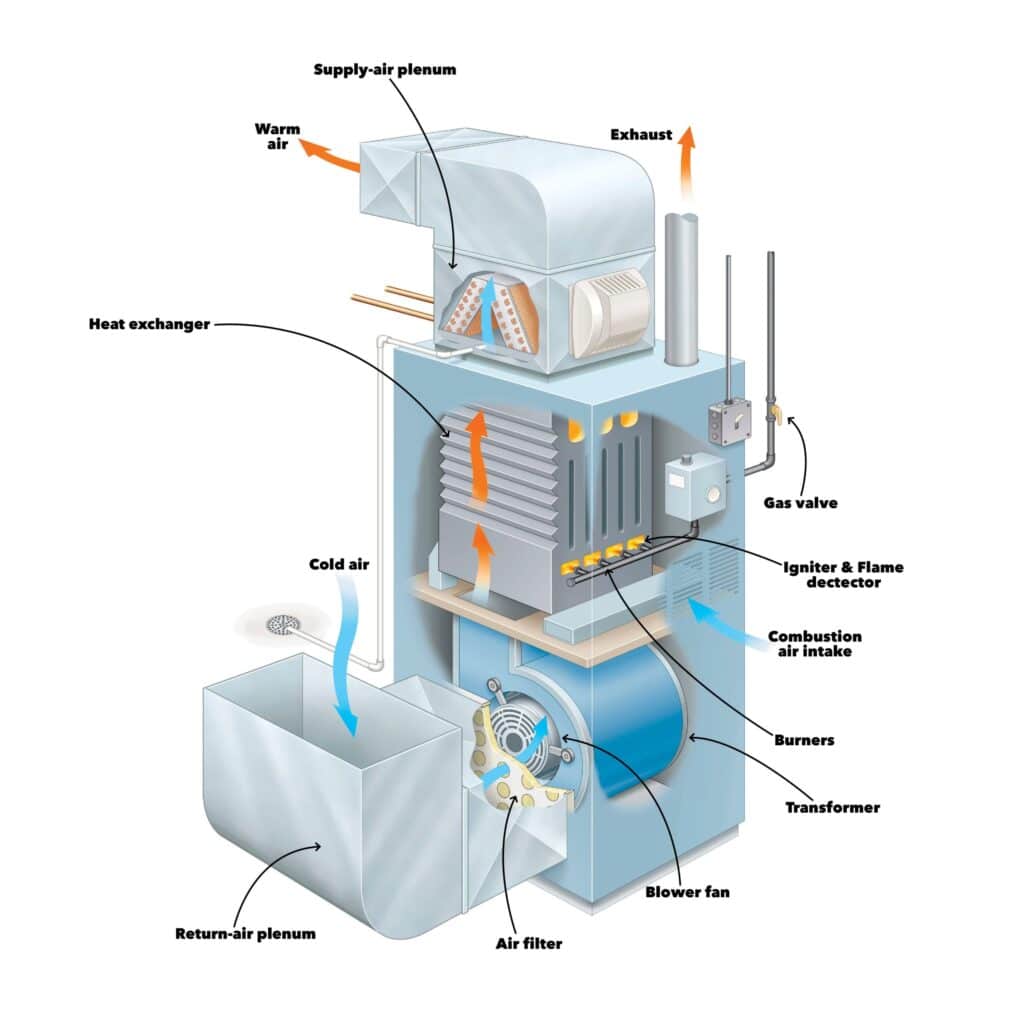
A furnace heat exchanger plays a critical role in keeping a home warm while separating combustion gases from the air circulated through living spaces. When this component develops cracks, corrosion, holes, or other damage, the problem can become more than a heating-efficiency issue—it may create a serious safety concern.
Understanding how heat exchanger problems develop, what warning signs to watch for, and when professional service is necessary can help homeowners respond appropriately. The U.S. Consumer Product Safety Commission recommends professional inspection of fuel-burning heating systems and emphasizes the importance of checking furnaces, vents, and related components for conditions that could allow carbon monoxide to enter a home.
Table of Contents
ToggleWhat Is a Furnace Heat Exchanger?
The heat exchanger is a component inside a furnace that transfers heat from combustion to the air that will be distributed through the home’s ductwork. In a typical gas furnace, burners produce combustion gases that travel through the heat exchanger before being exhausted through the venting system.
The heat exchanger is designed to keep those combustion products separated from the household air. If its metal surface remains intact, the furnace can transfer heat while directing combustion gases safely outdoors.
Because of this separation, damage to the heat exchanger deserves immediate attention.
Common Causes of Heat Exchanger Damage
Heat exchangers operate under repeated cycles of heating and cooling. Over many years, this expansion and contraction can contribute to metal fatigue. Eventually, weakened areas may develop cracks or other failures.
Corrosion and Rust
Moisture and corrosive conditions can gradually weaken furnace components. Internal corrosion has been documented as a potential pathway for combustion gases, including carbon monoxide, to enter living areas.
Thermal Stress
Every heating cycle exposes the heat exchanger to high temperatures followed by cooling. Repeated thermal expansion and contraction can place stress on the metal.
Poor Combustion
Improper combustion can produce excessive heat or undesirable combustion conditions. Problems involving burners, gas pressure, airflow, or venting can contribute to abnormal furnace operation and should be evaluated by a qualified technician.
Age and Wear
Older equipment has generally experienced more operating cycles and may have components approaching the end of their useful service life. Age alone does not prove that a heat exchanger is defective, but it can make regular inspection increasingly important.
Warning Signs of a Potential Heat Exchanger Problem
A damaged heat exchanger is not always obvious to a homeowner. Some warning signs can overlap with other furnace problems, so professional testing is necessary to determine the actual cause.
Possible signs include unusual furnace operation, unexplained changes in combustion, visible corrosion, soot, strange odors, repeated safety shutdowns, or deterioration around furnace components.
A technician may also identify combustion or venting abnormalities that are not easily noticed during normal operation.
Importantly, carbon monoxide itself cannot be reliably detected by human senses because it is colorless and odorless.
Why a Cracked Heat Exchanger Is a Safety Concern
The primary concern with a damaged heat exchanger is the possibility of combustion gases entering areas where household air is being circulated.
Carbon monoxide is particularly dangerous because it can interfere with the body’s ability to transport oxygen. Symptoms of exposure can include headaches, dizziness, nausea, weakness, confusion, and fatigue, while high concentrations can cause unconsciousness or death.
This is why a suspected heat exchanger failure should not be treated simply as a comfort or efficiency problem.
How Professionals Diagnose Heat Exchanger Problems
A qualified HVAC technician can perform a detailed furnace inspection rather than relying on a single visual check.
The process may include examining the heat exchanger, burner operation, venting system, flue connections, airflow, and other safety components. Depending on the furnace and suspected problem, technicians may use mirrors, inspection equipment, combustion analysis, and carbon monoxide testing.
The U.S. Department of Energy’s combustion-safety guidance includes inspecting heat exchangers for cracks or holes and checking combustion gases for carbon monoxide and other indicators of proper operation.
Can a Damaged Heat Exchanger Be Repaired?
The appropriate solution depends on the furnace design, the location and extent of the damage, manufacturer requirements, available replacement components, equipment age, and applicable safety requirements.
In some situations, replacing the heat exchanger may be technically possible. In others, replacing the entire furnace may make more practical sense, particularly when the unit is older or multiple components are deteriorating.
Homeowners should avoid attempting makeshift repairs, sealing cracks with household materials, or modifying combustion components. A heat exchanger is a safety-critical furnace component and should be evaluated by a qualified professional.
Heat Exchanger Replacement vs. Furnace Replacement
When a heat exchanger has failed, homeowners may receive two possible recommendations: replace the heat exchanger or replace the furnace.
A heat exchanger replacement can make sense when the furnace is otherwise in good condition and an appropriate replacement part is available. However, the total cost should be considered alongside the furnace’s age, efficiency, warranty status, condition of other components, and expected future repairs.
For an older furnace with several aging components, a complete replacement may eliminate repeated repair expenses and provide updated equipment.
Safety Steps for Homeowners
If you suspect a heat exchanger problem, avoid dismantling the furnace or attempting to inspect internal components yourself.
Instead, arrange for a qualified HVAC professional to evaluate the system. The CPSC specifically advises homeowners to have fuel-burning heating equipment professionally inspected and serviced annually.
Installing properly functioning carbon monoxide alarms is also an important household safety measure. If a carbon monoxide alarm sounds, occupants should immediately move to fresh air and contact emergency services rather than attempting to locate the source themselves.
When to Seek Furnace Repair in Orange County
Homeowners who notice unusual furnace operation, repeated shutdowns, suspected combustion problems, or visible deterioration should arrange an inspection rather than continuing to operate a potentially unsafe system.
Professional furnace repair Orange County services can include diagnosing furnace performance problems, evaluating combustion and safety controls, identifying heat exchanger concerns, and determining whether repair or replacement is appropriate.
A professional evaluation is especially important when there are concerns about carbon monoxide, because the source may involve the heat exchanger, venting system, combustion process, or another furnace component.
The Importance of Regular Furnace Maintenance
Routine maintenance can help identify deterioration before a small furnace problem becomes a major failure. During professional service, technicians can evaluate burners, heat exchangers, electrical components, safety controls, airflow, and venting.
The CPSC recommends annual professional inspection of fuel-burning home heating systems, while also emphasizing the importance of properly maintained vents and flues.
Regular maintenance cannot guarantee that a heat exchanger will never fail, but it can provide an opportunity to identify warning signs earlier.
Final Thoughts
Heat exchanger problems deserve careful attention because the component performs both a heating and safety function. Cracks, corrosion, holes, or other deterioration can potentially compromise the separation between combustion gases and household air.
Homeowners should never rely solely on visual inspection or attempt an improvised repair. Professional diagnosis, appropriate carbon monoxide safety measures, regular maintenance, and timely repairs can help keep a furnace operating safely and efficiently.
When a furnace shows signs of serious internal damage, getting a qualified assessment through furnace repair Orange County can help determine whether the appropriate solution is a component repair, heat exchanger replacement, or complete furnace replacement.
