



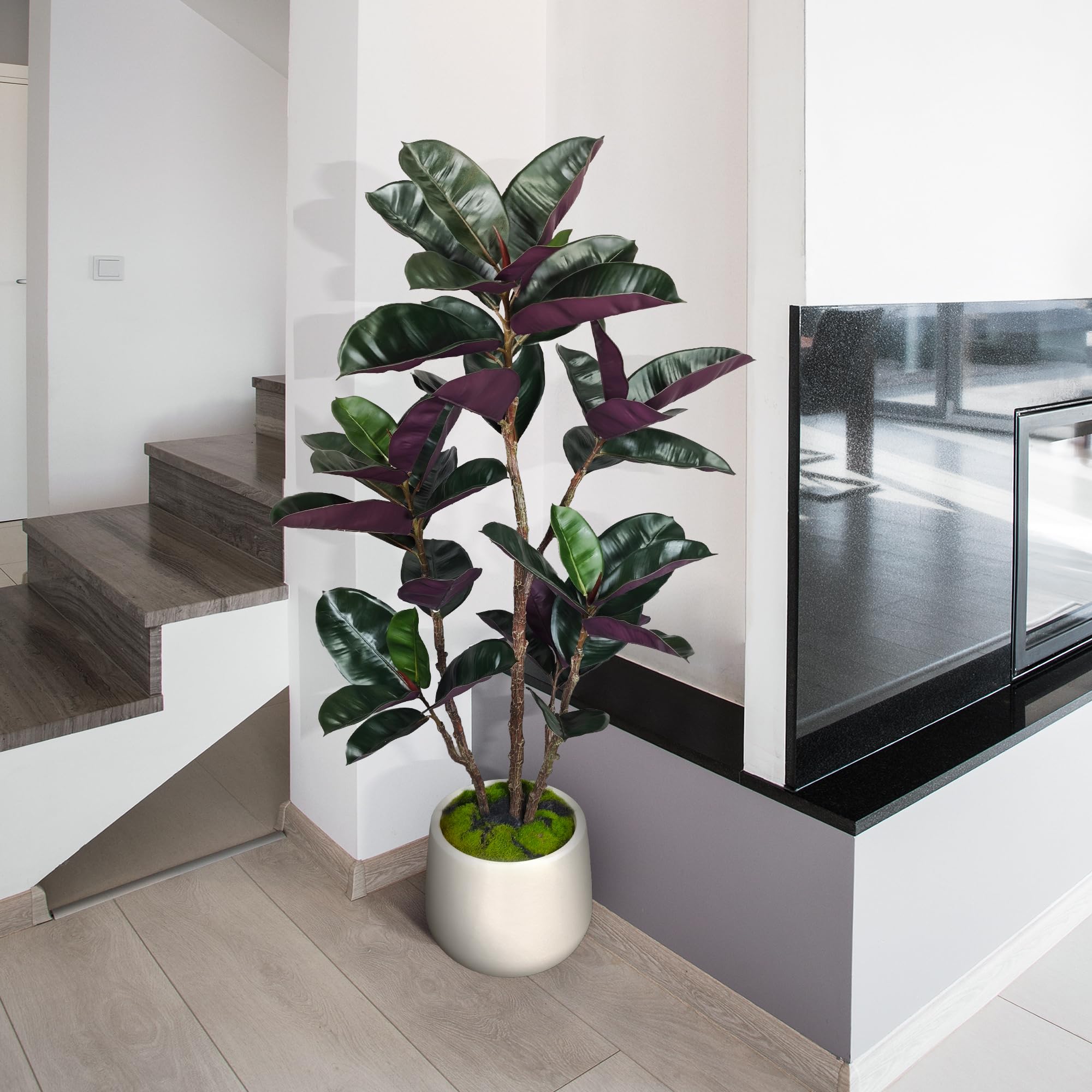
If you’re looking to upgrade your indoor décor without the hassle of maintenance, a fake rubber plant is one of the best choices you can make. With their broad, glossy leaves and bold structure, rubber plants naturally draw attention—and today’s artificial versions can look incredibly lifelike. But not all faux plants are created equal. Some look convincing from across the room, while others fall apart the moment you get close.
This guide will walk you through exactly how to choose the most realistic fake rubber plant, so your space looks stylish, natural, and effortlessly put together.
Why a Fake Rubber Plant Is So Popular
Before diving into how to choose one, it helps to understand why rubber plants are such a go-to option. Their thick, oval-shaped leaves and upright growth pattern make them perfect for filling empty corners or adding vertical interest. A fake version gives you all the aesthetic benefits without worrying about watering, sunlight, or leaf drop.
They’re especially ideal for:
- Low-light apartments
- Offices with no natural sunlight
- Busy lifestyles
- People who struggle with plant care
1. Look Closely at Leaf Texture and Finish
The leaves are the most important feature of any fake rubber plant. Real rubber plant leaves have a slightly waxy, glossy surface—but they’re not overly shiny.
When evaluating a plant:
- Avoid leaves that look plastic or overly reflective
- Look for subtle variations in sheen
- Check for fine vein detailing
High-quality artificial plants often use silk or PE (polyethylene) materials to replicate the soft yet structured feel of real leaves. If possible, touch the leaves—cheap ones feel stiff and thin, while premium ones feel thicker and more natural.
2. Check for Color Variation
Nature is never perfectly uniform, and your fake plant shouldn’t be either. One of the biggest giveaways of a low-quality fake rubber plant is flat, single-tone coloring.
A realistic option will have:
- Slightly darker and lighter green shades
- Subtle gradients along the leaf edges
- Natural-looking stems with color variation
Some premium versions even include tiny imperfections like faint spots or uneven tones, which actually enhance realism.
3. Inspect the Stem and Branch Structure
A realistic fake rubber plant doesn’t just rely on good leaves—the structure matters just as much.
Look for:
- Branches that aren’t perfectly symmetrical
- Flexible stems that can be adjusted
- Natural branching patterns (not evenly spaced like a grid)
Plants with wire inside the stems allow you to shape them, which is a big plus. You can spread out the leaves and create a more organic look instead of that stiff, artificial arrangement.
4. Pay Attention to the Trunk Detail
The trunk is often overlooked, but it’s a key factor in realism. Many low-quality artificial plants have trunks that look like smooth plastic rods.
A good fake rubber plant will feature:
- Textured bark-like finishes
- Slight irregularities in shape
- Natural color variations (brown, beige, or even hints of green)
Some high-end options use real wood trunks, which dramatically improves authenticity.
5. Evaluate the Pot and Base
Even the most realistic plant can look fake if it sits in a cheap, lightweight pot. Most artificial plants come in basic nursery pots, which are meant to be placed inside decorative planters.
For a more natural look:
- Choose a stylish outer pot (ceramic, woven, or terracotta-style)
- Add real soil, moss, or pebbles on top
- Ensure the base feels sturdy and not hollow
This small upgrade can make a huge difference in how convincing your plant looks.
6. Consider Size and Proportion
A fake rubber plant should fit your space just like a real one would. Oversized or undersized plants can look out of place and draw attention for the wrong reasons.
Think about:
- Ceiling height
- Furniture scale
- Room layout
For example:
- 4–5 ft plants work well beside sofas or desks
- 6 ft+ plants are ideal for empty corners or entryways
Proportion plays a big role in realism—when the scale feels right, the plant blends naturally into the environment.
- Look for Bendable and Adjustable Features
The best artificial plants allow you to customize their appearance. Leaves and branches that can be bent and repositioned help you avoid that “just unboxed” look.
Once you get your plant:
- Spread out the leaves unevenly
- Bend stems slightly outward
- Avoid perfect symmetry
This simple styling step instantly makes your fake rubber plant look more lifelike.
8. Check Reviews and Real Customer Photos
Product images can be misleading. Always check customer reviews and real-life photos before buying.
Look for:
- Close-up images of leaves and stems
- Feedback about material quality
- Comments on realism in natural lighting
If a plant looks good in user photos (not just studio lighting), it’s usually a safer bet.
9. Compare Materials: Silk vs Plastic vs PE
Different materials affect how realistic your plant looks and feels.
- Silk: Soft and natural-looking, but can fade over time
- Plastic: Durable but often looks less realistic
- PE (Polyethylene): Highly realistic texture, often used in premium plants
For the most convincing fake rubber plant, PE or a blend of silk and PE is usually the best choice.
10. Don’t Forget Placement and Styling
Even the most realistic artificial plant can look fake if it’s poorly placed.
To enhance realism:
- Place it near natural light sources
- Pair it with real décor elements like wood or textiles
- Avoid cluttering it with too many artificial items nearby
You can even mix it with real plants—this makes it much harder to tell which one is fake.
Final Thoughts
Choosing the most realistic fake rubber plant comes down to attention to detail. From leaf texture and color variation to trunk quality and styling, every element plays a role in how convincing the final look is.
A well-chosen fake rubber plant doesn’t just fill space—it elevates your entire room. Take the time to evaluate quality, customize its shape, and style it thoughtfully. When done right, even a trained eye might have to take a second look to realize it’s not real.
