



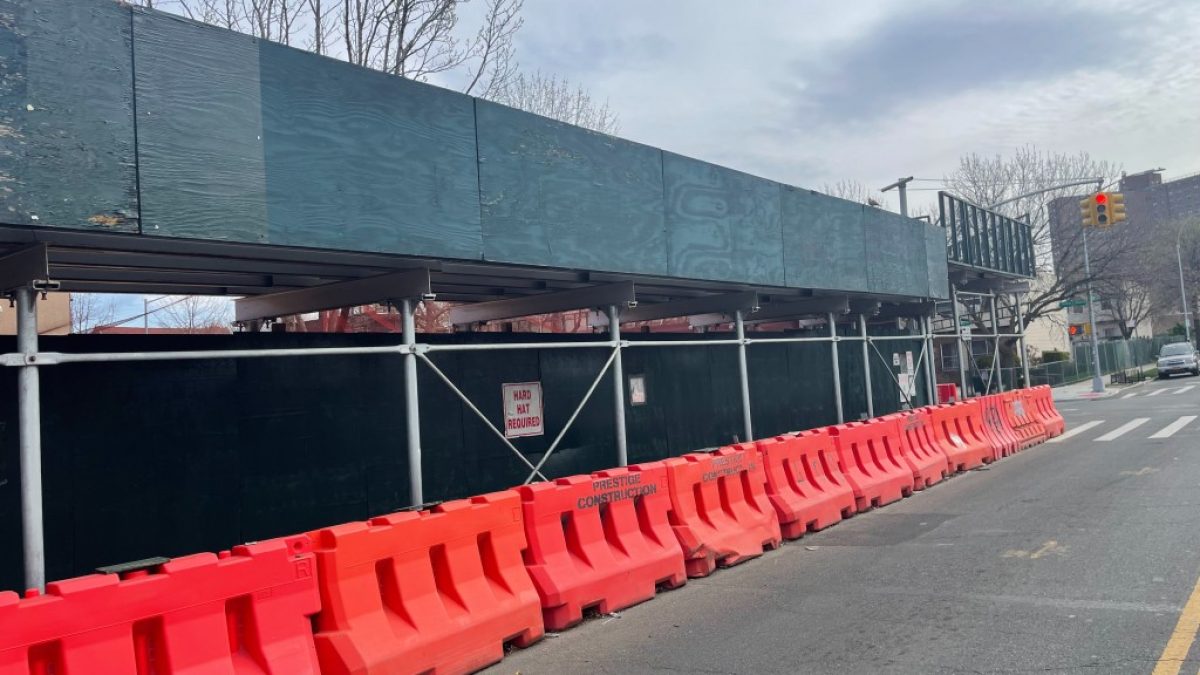
Perimeter control is one of the most consequential logistical decisions in any large-scale event or infrastructure project — and one of the most frequently underplanned. Whether the context is a multi-day outdoor festival, a road construction zone, a government-sanctioned public gathering, or a private venue requiring vehicle exclusion zones, the barrier system chosen determines not just the physical security of the perimeter but the operational efficiency of every activity that depends on it. Jersey barrier rental has become the preferred solution for organizations that require the mass, permanence, and vehicle-stopping capability of concrete barriers without the capital expense and logistical burden of ownership — delivering professional-grade perimeter protection on a project basis with the flexibility that permanent installation cannot provide.
Understanding what jersey barriers are, where they perform best, and what the rental process involves gives event planners, security coordinators, and municipal project managers the foundation for making perimeter decisions that hold up under pressure.
What Jersey Barriers Are and Why They Work
The jersey barrier — formally known as the New Jersey concrete barrier, developed by the New Jersey State Highway Department in the 1950s — is a modular concrete or plastic barrier unit designed originally for highway median separation. Its distinctive profile geometry: a narrow base that widens at a low angle before tapering inward toward the top, is not aesthetic. It is engineered to redirect vehicle impact forces upward and away from the barrier rather than absorbing them directly — causing impacting vehicles to ride up the barrier face and redirect laterally rather than penetrating the barrier or causing rollover at highway speeds.
This impact geometry, combined with the mass of concrete construction — typically 1,200 to 4,000 pounds per unit depending on dimensions — makes jersey barriers the most effective vehicle mitigation solution available in a deployable, modular format. No comparable barrier type provides equivalent vehicle-stopping capability at equivalent cost across temporary deployment contexts.
The modular design of jersey barriers allows units to be connected end-to-end using steel pin connections that create a continuous barrier line of any required length — deployable in straight runs, curves, and complex geometric configurations that fixed infrastructure cannot accommodate. This combination of vehicle-stopping mass and deployment flexibility is what makes jersey barrier rental the appropriate solution for contexts ranging from a single-lane road closure to a multi-block event perimeter.
Where Jersey Barrier Rental Delivers Its Most Critical Value
Event perimeter and vehicle exclusion zones.
The threat environment for large public events has shifted the security calculus for event planners and venue operators significantly over the past decade. Vehicle-based threats to crowded public spaces have made passive vehicle mitigation — barriers that stop vehicles without requiring active security intervention — a standard component of professional event security planning rather than an exceptional measure.
Jersey barriers deployed at event perimeter access points, pedestrian entry corridors, and staging area boundaries provide vehicle exclusion that security personnel alone cannot deliver — a physical mass that no vehicle can penetrate regardless of intent or momentum. For events where crowd density, pedestrian flow volumes, or public profile create elevated risk profiles, jersey barrier rental provides the mitigation level that the threat environment requires at a project cost that event budgets can accommodate.
Road construction and infrastructure projects.
Construction zones require barrier systems that protect both workers and the traveling public from vehicle intrusion — a requirement that plastic water-filled barriers meet at low traffic speeds but that jersey barriers address at highway speeds and in high-volume traffic environments where the consequences of barrier failure are most severe.
Municipal agencies and construction contractors managing road projects on arterial roads, highways, and urban corridors where traffic volumes and speeds create elevated worker safety risk specify jersey barriers as the appropriate protection standard — their mass and impact geometry providing worker zone protection that no lighter barrier type matches. Jersey barrier rental for construction projects covers the project duration without the capital and storage costs of ownership — a practical advantage for contractors and agencies whose project pipeline does not justify permanent barrier inventory.
Government and municipal crowd management.
Planned public gatherings — protests, parades, civic events, and political assemblies — require crowd management infrastructure that municipal agencies can deploy rapidly, configure to the specific geometry of the gathering location, and recover efficiently after the event concludes. Jersey barriers provide the physical crowd separation and vehicle exclusion that high-profile public gatherings require, in a format that municipal logistics teams can manage with standard heavy equipment without specialized installation expertise.
Security and logistics operations.
Security companies managing high-value asset protection, checkpoint operations, and controlled access environments use jersey barriers to create physical security perimeters that define and enforce access boundaries without requiring continuous active security presence at every point. The mass and visibility of concrete jersey barriers communicate the seriousness of access control in ways that lighter barrier types do not — a deterrence function that complements their physical stopping capability.
Concrete vs. Plastic Jersey Barriers: Choosing the Right Specification
Jersey barriers are available in two primary material specifications — concrete and plastic — each appropriate for different use contexts:
Concrete jersey barriers provide maximum vehicle-stopping capability through mass that no other portable barrier type replicates. Weighing between 1,200 and 4,000 pounds per unit, concrete barriers are appropriate for highway construction zones, high-profile event perimeters with elevated vehicle threat risk, and any application where the consequences of barrier penetration are most severe. Their mass requires heavy equipment for placement and recovery — a logistical consideration that rental providers handle as part of the delivery and installation service.
Plastic water-filled jersey barriers provide a lighter, more manually manageable alternative for applications where vehicle threat risk is lower and deployment flexibility is the primary operational priority. Filled with water on-site — typically to 400 to 700 pounds per unit — plastic barriers provide adequate vehicle mitigation for low-speed vehicle intrusion scenarios and pedestrian crowd separation applications where the mass of concrete barriers exceeds the threat requirement.
The selection between concrete and plastic specifications should be driven by the specific threat environment and vehicle speed context of the application — concrete for highway speeds and elevated threat contexts, plastic for low-speed and pedestrian-focused applications where deployment flexibility outweighs maximum mitigation capability.
Planning a Jersey Barrier Rental: Key Operational Considerations
Quantity and linear footage requirements. Jersey barrier rental planning begins with calculating the linear footage of perimeter requiring coverage — accounting for all access points, pedestrian corridors, and boundary segments that require physical barrier protection. Standard jersey barrier units are available in eight-foot and twelve-foot lengths — calculating linear footage requirements and dividing by unit length produces the unit quantity needed, with additional units added for corner configurations and connection hardware.
Site access for delivery and placement. Concrete jersey barriers require crane trucks or forklifts for placement — the delivery vehicle must have physical access to every point along the planned barrier line to place units correctly. Sites with restricted overhead clearance, narrow access routes, or soft ground that cannot support heavy vehicle loads require advance coordination with the rental provider to ensure that the delivery equipment specified can access the site and place barriers without infrastructure damage or safety compromise.
Permit requirements. Jersey barrier deployment on public roads, sidewalks, or municipal property typically requires permits from the relevant municipal authority — specifying the barrier location, duration, and safety provisions for pedestrian and vehicle traffic affected by the deployment. Municipal agencies managing their own deployments are typically exempt from external permit requirements but must coordinate barrier placement with traffic management and public safety departments. Event planners and private contractors should confirm permit requirements with local authorities well in advance of the planned deployment date.
Connection and configuration hardware. Jersey barriers deployed as continuous perimeter lines require steel connecting pins that link units end-to-end and prevent individual units from being displaced by vehicle impact or crowd pressure. Rental providers supply connection hardware as part of the rental package — confirming that adequate connection hardware is included in the rental specification prevents gaps in barrier continuity that compromise perimeter integrity.
Recovery and removal planning. Jersey barrier removal requires the same heavy equipment as installation — planning removal timing, equipment availability, and site access for recovery at the end of the rental period prevents the scheduling conflicts and extended rental costs that unplanned recovery delays produce.
What to Confirm When Selecting a Jersey Barrier Rental Provider
The jersey barrier rental market includes providers whose operational capabilities vary significantly — from full-service providers who handle delivery, placement, connection, and recovery with their own equipment and crews to equipment-only providers who deliver barriers to the site boundary and leave placement to the customer. For most event, construction, and municipal applications, full-service rental — where the provider handles all phases of the deployment from delivery through recovery — produces better operational outcomes than equipment-only rental that transfers placement responsibility to customers without the specialized equipment to execute it.
Key confirmation points when evaluating rental providers: delivery and placement capability with appropriate equipment for the site; connection hardware inclusion in the rental package; permit coordination support for deployments on public property; flexible rental duration terms that accommodate project timeline changes; and responsive customer service for modifications to barrier configuration after initial deployment.
Professional Perimeter Solutions for Every Scale of Operation
Effective perimeter control is not a detail — it is the physical infrastructure that makes every other security and operational plan executable. Whether the requirement is a single access point vehicle exclusion barrier or a multi-block event perimeter covering thousands of linear feet, the right barrier specification and the right rental partner determine whether that infrastructure performs when it matters most.
Epic Crowd Control provides professional jersey barrier rental and concrete barricade solutions for event planners, municipal agencies, and security organizations across every scale of deployment — with the equipment inventory, delivery capability, and operational expertise to execute perimeter solutions that hold up under the demands of real-world use. Explore the full range of crowd control solutions and build a perimeter plan that performs.
