



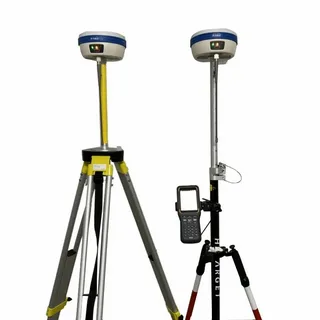
Global Navigation Satellite System (GNSS) technology has revolutionized modern land surveying by delivering precise positioning data across various environments. From construction projects to infrastructure development and geospatial mapping, surveyors rely heavily on high-quality GNSS equipment to ensure accuracy and efficiency. Understanding the Top Features to Look for in Professional gnss surveying equipment helps professionals select the right tools for reliable performance and long-term productivity.
High Positioning Accuracy
One of the most important aspects of GNSS surveying equipment is its level of positioning accuracy. Professional surveyors require centimeter-level precision to ensure reliable measurements for engineering and construction projects.
High-end GNSS receivers support technologies such as Real-Time Kinematic (RTK) and Post-Processed Kinematic (PPK), which significantly improve measurement precision. When evaluating the Top Features to Look for in Professional GNSS Surveying Equipment, accuracy should always be a top priority because even minor errors can impact project outcomes.
Multi-Constellation and Multi-Frequency Support
Modern GNSS equipment should be capable of accessing multiple satellite constellations, including GPS, GLONASS, Galileo, and BeiDou. Multi-constellation support improves satellite visibility, especially in challenging environments such as urban areas or dense forests.
Additionally, multi-frequency capability allows receivers to track signals on multiple bands, reducing signal interference and improving reliability. This is considered one of the Top Features to Look for in Professional GNSS Surveying Equipment, as it ensures consistent data collection even under difficult conditions.
Fast Initialization and Reliable Signal Tracking
Surveyors often work in dynamic environments where time is critical. GNSS receivers that offer fast initialization allow users to start collecting accurate data within seconds. Advanced signal tracking technologies also help maintain a stable connection with satellites.
Reliable signal tracking minimizes downtime and ensures continuous data collection, which is essential for field productivity. This feature is frequently highlighted among the Top Features to Look for in Professional GNSS Surveying Equipment because it directly affects efficiency during field operations.
Durability and Weather Resistance
Professional surveying equipment must withstand harsh environmental conditions. Fieldwork often exposes devices to dust, rain, heat, and rough handling. Equipment designed with rugged construction and high protection ratings such as IP67 or IP68 ensures durability.
Durability not only protects the device but also guarantees consistent performance in challenging work environments. Rugged design is therefore an important consideration when evaluating the Top Features to Look for in Professional GNSS Surveying Equipment.
Long Battery Life and Power Efficiency
Surveying projects can take several hours or even full days in the field. GNSS equipment with extended battery life allows surveyors to work longer without interruptions.
Modern devices often include hot-swappable batteries, allowing users to replace batteries without shutting down the system. Efficient power management ensures continuous operation and improved productivity during long surveying sessions.
Seamless Connectivity and Data Integration
Another essential feature is strong connectivity with other surveying tools and software. GNSS receivers that support Bluetooth, Wi-Fi, cellular networks, and USB connectivity enable easy data transfer and remote configuration.
Compatibility with GIS and surveying software platforms allows professionals to integrate collected data directly into their workflows. Seamless connectivity simplifies data management and improves project efficiency.
User-Friendly Interface and Field Software
Advanced technology is most effective when it is easy to use. GNSS surveying equipment should include intuitive interfaces and reliable field software to simplify data collection and management.
Clear displays, simple menus, and automated workflows help reduce errors and improve efficiency. User-friendly systems allow both experienced surveyors and beginners to operate the equipment effectively.
Conclusion
Selecting the right surveying tools requires careful evaluation of performance, reliability, and usability. By understanding the Top Features to Look for in Professional GNSS Surveying Equipment, professionals can invest in technology that improves accuracy, efficiency, and project outcomes. From multi-constellation support to rugged durability and seamless connectivity, modern GNSS solutions continue to enhance the capabilities of surveyors working in diverse environments.
